Autumn brings cosy knitwear, stylish coats and plenty of opportunities to switch up your hair look. But alongside the changing season comes a familiar set of hair challenges: unexpected rain, damp air, frizz and the dreaded tangles that appear after a day wrapped up in scarves and high-neck jumpers. When you wear hair extensions, these seasonal changes can make your usual hair routine feel a little more complicated.
The good news is that keeping your hair extensions looking smooth, soft and beautifully blended throughout autumn doesn't need to be difficult. With the right habits, a little preparation and an understanding of how weather and fabrics affect your hair, you can maintain your look even when the forecast isn't on your side. Whether you wear seamless clip-Ins for added length and volume or have a salon-applied hair extension method, here's how to navigate autumn weather, manage frizz and protect your hair from the everyday challenges of the season.
“Autumn weather can make keeping your hair smooth and manageable a little more challenging, especially when rain, humidity and friction from scarves and knitwear all come into play. The key is to be consistent with your aftercare: keep your hair extensions hydrated, detangle gently and always use heat protection when styling. Small changes to your daily routine can make a real difference to how your hair looks and feels, helping you maintain soft, shiny lengths throughout the season.”
– Tom Clark, CEO & Founder at SWAY Hair Extensions
Why Autumn Weather Can Be Tricky For Hair Extensions
Autumn weather rarely stays the same for long. One moment it's bright and breezy, the next, you're caught in a shower with damp hair and a coat pulled up around your ears. Changes in humidity can affect the way your natural hair and hair extensions sit, sometimes making frizz, flyaways and uneven texture more noticeable.
Human hair extensions can respond to moisture in the air, just like natural hair. When the weather is damp, hair may become less smooth or lose some of its carefully styled shape. If your natural hair reacts differently from your hair extensions, the contrast can be particularly noticeable around the mid-lengths and ends.
Wind can add another challenge, leaving lengths tangled and making hair harder to manage throughout the day. Add frequent changes between cold outdoor air and warm indoor environments, and your hair can quickly lose its freshly styled appearance.
The key is to focus on prevention rather than trying to fix everything once your hair has become frizzy or tangled. A consistent routine, gentle handling and suitable styling products can help your hair extensions remain manageable throughout the season.

How To Keep Frizz Under Control On Damp Days
Frizz is one of autumn's most common hair frustrations, especially when you're trying to maintain a smooth blow-dry or defined waves. There are a few simple ways to help your hair look more polished.
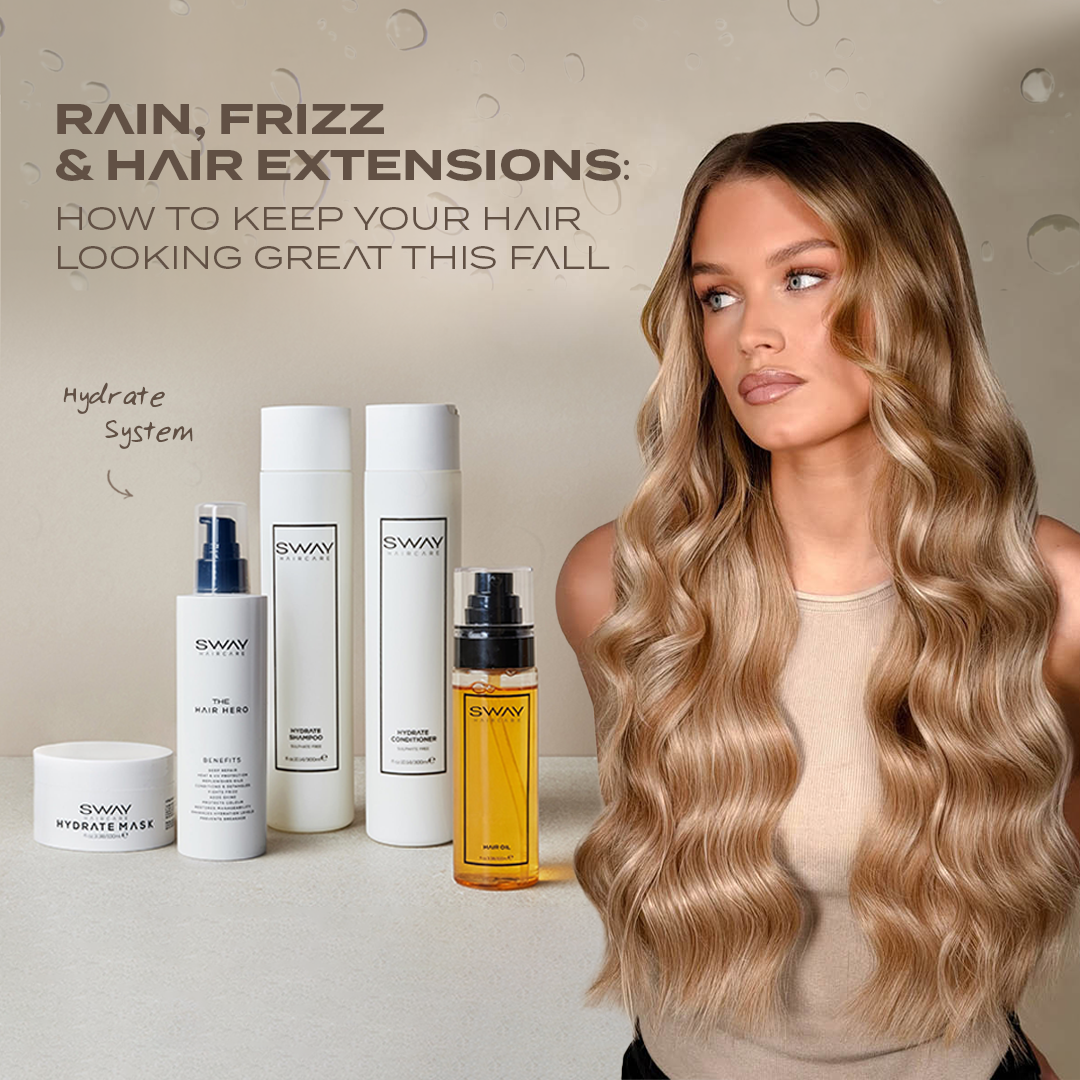
Start with a well-prepared base. After washing with SWAYs Hydrate Shampoo, and applying SWAYs Hydrate Conditioner gently remove excess water with a soft towel rather than rubbing your hair vigorously. Allow your hair to dry thoroughly before styling, paying particular attention to the areas around your hair extension attachments if you wear a permanent or semi-permanent method - follow the aftercare instructions specifically. The Award Winning Hydrate System also provides the ultimate nourishment to your hair and hair extensions needs.
For an extra helping hand on damp days, The Hair Hero is a great addition to your haircare routine. Designed specifically for use with SWAY Hair Extensions, this multi-benefit serum helps condition and detangle the hair while helping to control frizz and improve manageability. It also helps replenish oils, enhance hydration and add shine, making it particularly useful when autumn weather leaves your lengths feeling dry or unruly. Apply it through the mid-lengths and ends of clean, towel-dried hair before continuing with your usual styling routine.
Before using heated styling tools, apply a suitable heat protectant and work in manageable sections. A controlled styling routine can help create a smoother finish without repeatedly passing over the same section of hair. Avoid excessive heat, and the recommended temperature guidance is a maximum 180 degrees.
The Hair Hero also helps tame flyaways and improve the appearance of dry-looking lengths. The Hair Hero can add softness and shine. If the forecast predicts rain, consider styles that work with the weather rather than against it. A sleek low ponytail, a soft braid or a relaxed bun can look just as considered as a freshly curled style, while keeping the lengths more contained. You can always refresh your look when you arrive at your destination, rather than spending the day trying to preserve a style that the weather is determined to undo.
Rain-Proofing Your Hair Without Compromising Your Style
Getting caught in the rain is sometimes unavoidable, but how you handle your hair afterwards can make a real difference. The most important thing is to avoid leaving your hair extensions wet and tangled for extended periods.
If your hair gets damp, gently separate any sections that have started to cling together using your fingers or a suitable hair extension brush. Work carefully from the ends upwards, supporting the hair as you detangle. Avoid pulling through knots, as forceful brushing can put unnecessary tension on both your natural hair and your hair extensions.
When you get indoors, allow the hair to dry correctly. If you wear a fitted hair extension method, take particular care around the attachment areas. It's also worth thinking ahead before leaving the house. A compact umbrella, a hood that doesn't rub excessively against your hair, or a loose protective style can help limit exposure to the weather. If you're heading to an event or have a busy day ahead, a little preparation can save you from having to restyle your hair completely.
For seamless clip-ins, consider removing them before washing or if they become significantly wet. Once removed, gently detangle them and allow them to dry fully before storing them. Keeping your hair extensions dry and correctly stored between wears will help you keep them looking their best and get more from them over time.
Coat Season: How To Stop Your Hair Extensions Tangling In Scarves & Knitwear
Coat season brings some of autumn's best style moments, but it can also be surprisingly hard on longer hair. Scarves, wool coats, chunky knit jumpers and high collars create friction against the mid-lengths and ends, encouraging strands to catch, twist and form knots throughout the day.
If you wear hair extensions, this can be especially frustrating because tangles may build up where your hair repeatedly rubs against fabric. The simplest solution is to think about how you wear your hair with your outfit. When putting on a scarf or coat, lift your lengths out from underneath the fabric rather than trapping them against your back or collar. A loose braid, low ponytail or relaxed bun can help keep the hair contained on windy days, while a smooth, low-friction scarf lining may reduce rubbing. During the day, take a moment to bring your hair forward over your shoulders or gently separate the lengths before knots become difficult to remove. Keep a suitable hair extension brush with you and detangle carefully from the ends upwards, holding the hair above the knot to reduce pulling. Avoid yanking at tangles or repeatedly brushing dry hair aggressively. With a few small adjustments, including the use of The Hair Hero you can enjoy your favourite autumn layers while helping your hair extensions stay smoother and easier to manage.

The Best Autumn Haircare Routine For Hair Extensions
As the weather changes, your haircare routine may need a little adjustment too. Cooler temperatures and indoor heating can leave lengths feeling less supple, while damp conditions can make hair more prone to tangling and changes in texture. A balanced routine helps keep your hair extensions feeling soft and manageable during the cooler season.
Wash gently. Use The Award Winning Hydrate System, suitable for both your natural hair and human hair extensions. Work shampoo carefully through the hair without rough scrubbing, and rinse thoroughly. Conditioner should generally be concentrated on the mid-lengths and ends, keeping it away from attachment points.
Keep lengths moisturised. Conditioning and The Hydrate Masks can help maintain the feel and manageability of hair extensions. Apply them as directed, and avoid allowing products to build up around bonds, tapes or other attachment areas. Hair extensions don't receive natural oils from the scalp in the same way as your own hair, so the right level of conditioning is essential.
Brush consistently, but gently. Detangling little and often is usually easier than tackling a large knot at the end of the day. Begin at the ends and gradually work upwards, using SWAY’s selections of brush designed for hair extensions. Support the hair near the attachments when brushing to minimise unnecessary tension.
Protect your hair before styling. Whether you're creating loose waves or a sleek autumn blow-dry, use heat protection and avoid excessive temperatures (maximum 180 degrees) to protect both your natural hair and hair extensions.
Autumn Hairstyles That Work With The Weather
When rain and humidity are part of the forecast, choosing a practical hairstyle doesn't mean sacrificing the look you want. In fact, autumn is the perfect time to experiment with styles that combine texture, movement and a little extra volume.
A low ponytail is a simple option for busy days. Smooth the hair gently, secure it without pulling too tightly and wrap a small section of hair around the band if you want a more polished finish. If you wear hair extensions, make sure the style doesn't place unnecessary tension on the attachment points.
For a softer look, try loose braids. A single braid or two relaxed plaits can help contain the lengths and reduce tangling when you're wearing scarves and coats. You can gently loosen the braid once you're indoors for a relaxed, textured finish.
If you prefer wearing your hair down, soft waves can offer movement without requiring every strand to sit perfectly in place. Use heat protection when styling, allow the hair to cool before brushing through and finish with The Hair Hero. A little natural movement can make the style feel intentional, even when the weather changes.
For occasions when you want something more elevated, a sleek low bun keeps the hair away from collars and knitwear while creating a refined finish. Just remember to keep the style comfortable and avoid securing your hair too tightly, particularly if you wear a method that needs careful management around the attachments.
SWAY Clip-Ins can also be a useful option when you want to add length or volume for a particular look. As a temporary method, they allow you to create a fuller ponytail, thicker braid or more voluminous waves when the occasion calls for it. Remove and care for them according to their instructions.
Keeping Your Hair Extensions Looking Their Best All Season
Rainy mornings, damp afternoons and cosy layers are all part of autumn, but they don't have to stand between you and the hair you love. With thoughtful styling, gentle brushing and a routine tailored to your hair extensions, you can help keep your lengths smooth, manageable and ready for whatever the season brings.
It's equally important to avoid trying to fix every weather-related change with more heat or product. Gentle, consistent care will generally serve your hair extensions better than repeatedly brushing, smoothing or restyling them throughout the day. If you notice persistent matting, slipping or changes around your attachment points, speak to a salon professional rather than attempting to resolve the issue yourself.
At SWAY Hair Extensions, the right hair extension method and aftercare routine are central to achieving a look that suits your hair, lifestyle and styling preferences. Whether you love long, flowing lengths or prefer a little extra volume for your favourite autumn hairstyles, choosing the right approach can help you feel confident in every season.
Embrace the season, experiment with styles that suit your routine and enjoy the freedom to wear your hair your way with SWAY.
How To Keep Your Hair Looking Great This Fall: FAQs
1. Can rain damage hair extensions?
Occasional exposure to rain doesn't automatically damage human hair extensions, but leaving them wet, tangled or improperly dried can contribute to maintenance issues. Gently detangle damp hair and follow the drying instructions for your hair extension method.
2. How do I stop my hair extensions going frizzy in humid weather?
Prepare your hair with our award winning hydrate system (which includes the Hair Hero) and use heat protection when styling. Styles such as braids and low ponytails can also help keep hair manageable when humidity is high.
3. Why do my hair extensions tangle in scarves and jumpers?
Repeated friction between your hair and textured fabrics can cause strands to catch and knot, particularly around the mid-lengths and ends. Wear your hair over your coat or in a loose braid and detangle gently throughout the day.
4. How often should I brush my hair extensions in autumn?
Brush regularly enough to prevent tangles from building up, especially after being outdoors or wearing scarves and high collars. Start at the ends, work upwards and use SWAY’s hair extension friendly brushes.